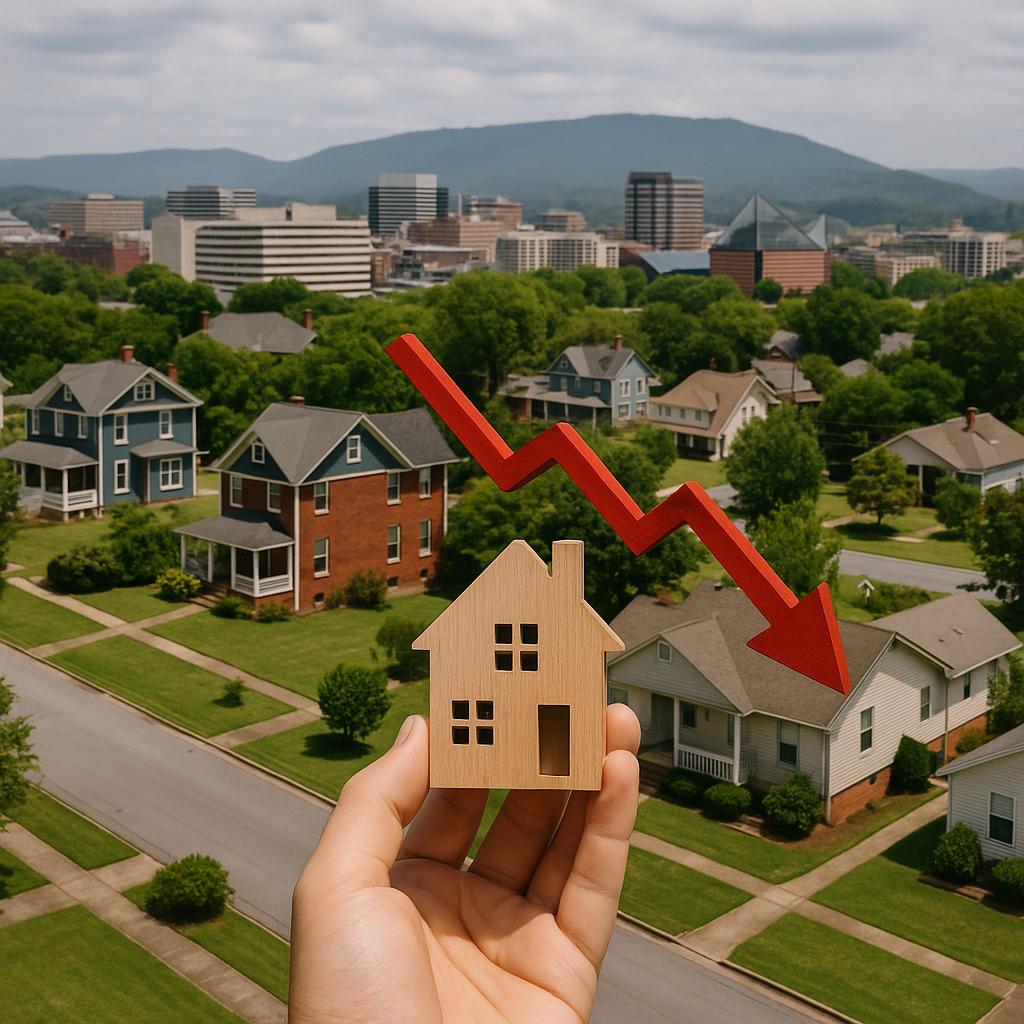
A recent Realtor.com report indicates that the entry price for a luxury home fell to $1,200,005 in August, following 29 months of declining prices in that segment. While luxury real estate is outside the budget of most buyers, the trend may still matter to owners and investors evaluating high-end rental properties, portfolio values, and acquisition opportunities.
For Chattanooga-area rental property owners, the most important point is that a change in luxury home pricing does not automatically translate into higher rental demand or better investment returns. Instead, it is a reason to review how purchase prices, operating costs, tenant demand, and property management requirements work together in Southeast Tennessee.
Overview of the News
The report focuses on the luxury housing market and the price required to enter that category. According to the supplied article data, the threshold dropped to $1,200,005 during August. The decline occurred after an extended period of falling luxury prices, described as 29 consecutive months.
This information concerns high-end home sales rather than rental performance. It does not provide Chattanooga-specific pricing, rent levels, vacancy rates, transaction volume, or operating expenses. As a result, local owners should treat the report as broader market context rather than proof that luxury properties in Chattanooga or Southeast Tennessee have experienced the same movement.
Even so, luxury pricing can influence investment decisions. When higher-priced properties become somewhat less expensive, some buyers may reconsider purchasing them. Other owners may become more cautious if resale values have weakened or if the cost of carrying a large property is difficult to support through rental income.
What This Means for Chattanooga Rental Property Owners
For owners of high-end rentals, the key question is not simply whether the property value has changed. The more useful question is whether the property still performs as a rental after accounting for all expenses and the time required to operate it.
A luxury home can involve higher taxes, insurance costs, utility expenses, landscaping needs, repair bills, and replacement costs than a more moderately priced rental. Larger homes may also require more frequent attention between tenants. Features that help attract residents, such as upgraded kitchens, outdoor spaces, garages, pools, or specialized systems, can create additional maintenance responsibilities.
If a property owner purchased at a high price, a decline in the luxury segment could affect refinancing plans, insurance decisions, or the expected proceeds from a future sale. It may also influence whether converting a primary residence into a long-term rental is financially practical. Owners should evaluate the property using current income and expenses rather than relying only on the original purchase price or an assumed appreciation rate.
Rental positioning is equally important. A property marketed as luxury must generally provide a level of condition, responsiveness, and upkeep that supports its asking rent. If the rent is set based on the owner’s investment cost instead of comparable rental demand, the result may be longer vacancy or increased turnover.
Impact on the Chattanooga Rental Market
The available news does not establish that Chattanooga luxury rents are falling or that local vacancy is increasing. Those questions require local rental comparisons and property-level analysis. Still, the national luxury trend provides several issues for investors to monitor.
First, changes in high-end purchase prices may affect the supply of properties available for rent. Some prospective buyers who decide not to purchase may continue renting, while some owners who cannot sell on their preferred timeline may place a home on the rental market. Neither outcome is guaranteed, and the effect may vary by neighborhood and property type.
Second, rental demand is not uniform across Chattanooga. A high-end property near Downtown Chattanooga or Northshore may appeal to a different tenant pool than a large home in Lookout Mountain or Signal Mountain. Location, commute patterns, school considerations, access to employment centers, property layout, and lease preferences all influence the likely renter. A luxury label alone does not establish demand.
Third, owners should distinguish between long-term and mid-term rental strategies. A furnished mid-term rental may attract a different audience from a traditional year-long lease, but it can also involve furnishing costs, increased turnover, utility management, and more frequent inspections. A long-term lease may offer a more predictable operating structure, but the property still needs to be priced and maintained according to local demand.
For investors, these differences make neighborhood-level research more useful than relying on a national headline. A pricing shift in the broader luxury housing market may be relevant, but it does not replace an analysis of expected rent, tenant quality, vacancy exposure, maintenance costs, and management workload for a specific Chattanooga property.
What Real Estate Investors Should Watch
Investors evaluating luxury or upper-tier rental properties in Southeast Tennessee should track several factors before changing an acquisition strategy.
Purchase price compared with realistic rental income: A lower purchase price may improve the potential financial structure of an investment, but only if the property can support appropriate rent. Investors should use conservative rent assumptions and account for vacancy, repairs, leasing costs, management, insurance, taxes, utilities, and capital improvements.
Condition and deferred maintenance: A property that appears attractively priced may require substantial work. High-end finishes and specialized equipment can make repairs more expensive. A detailed inspection and realistic reserve planning are important before making an offer or converting the property to a rental.
Tenant pool and lease terms: Luxury rentals may appeal to executives, relocating professionals, corporate tenants, families, or other groups with specific requirements. Investors should determine whether the location and floor plan fit a durable tenant segment rather than assuming that a premium property will lease quickly.
Local market differences: Downtown Chattanooga, Northshore, Lookout Mountain, and Signal Mountain should not be treated as interchangeable rental markets. Property size, access, amenities, neighborhood character, and tenant expectations can vary significantly. Comparable rentals should be as similar as possible in location, condition, size, furnishings, and lease structure.
Exit strategy: Investors should consider whether the property would remain financially workable if the intended sale takes longer than expected. A rental property should not depend entirely on short-term appreciation. The operating plan should account for changing rents, repairs, vacancies, and the possibility that market conditions will differ at the time of sale.
Practical Next Steps for Property Owners
Owners can use this news as a prompt for a property-level review rather than as a reason to make an immediate change.
- Review current market rent using comparable Chattanooga-area properties with similar condition, size, location, and lease terms.
- Separate gross rent from actual operating income by accounting for vacancy, maintenance, turnover, insurance, taxes, utilities, and management expenses.
- Inspect major systems and high-cost features so that deferred maintenance does not undermine the property’s rental performance.
- Compare long-term and mid-term rental strategies based on expected demand, furnishing requirements, tenant communication, turnover, and regulatory considerations that may apply to the chosen use.
- Update the property’s estimated value and exit assumptions without treating appreciation as guaranteed.
Owners who are considering converting a high-end home into a rental should also establish a clear leasing plan before making improvements. Not every upgrade produces a corresponding increase in rent. Improvements should be evaluated according to tenant demand, durability, maintenance requirements, and the likely holding period.
Professional management can also be valuable when a property requires more frequent communication, detailed inspections, vendor coordination, or careful rent positioning. Management does not eliminate vacancy, maintenance, or market risk, but an organized process can help owners monitor those issues and make decisions using current operating information.
If you own rental property in the Chattanooga area and are evaluating whether professional management makes sense for your investment, Capstar Property Management can help you review your current management needs and property goals.
Key Takeaways for Chattanooga Investors
- The luxury home entry price reported by Realtor.com fell to $1,200,005 in August after 29 months of declines, but the report does not provide Chattanooga-specific rental data.
- A lower luxury purchase price does not automatically mean stronger rental returns; income, vacancy, expenses, condition, and tenant demand still determine performance.
- High-end properties in areas such as Downtown Chattanooga, Northshore, Lookout Mountain, and Signal Mountain may serve different tenant groups and should be compared locally.
- Owners should evaluate long-term and mid-term rental plans using realistic operating costs and management requirements.
- Investors should treat the news as a reason to review assumptions, not as a guarantee of improved property values or rental income.
Created by Capstar Property Management AI Assistant.