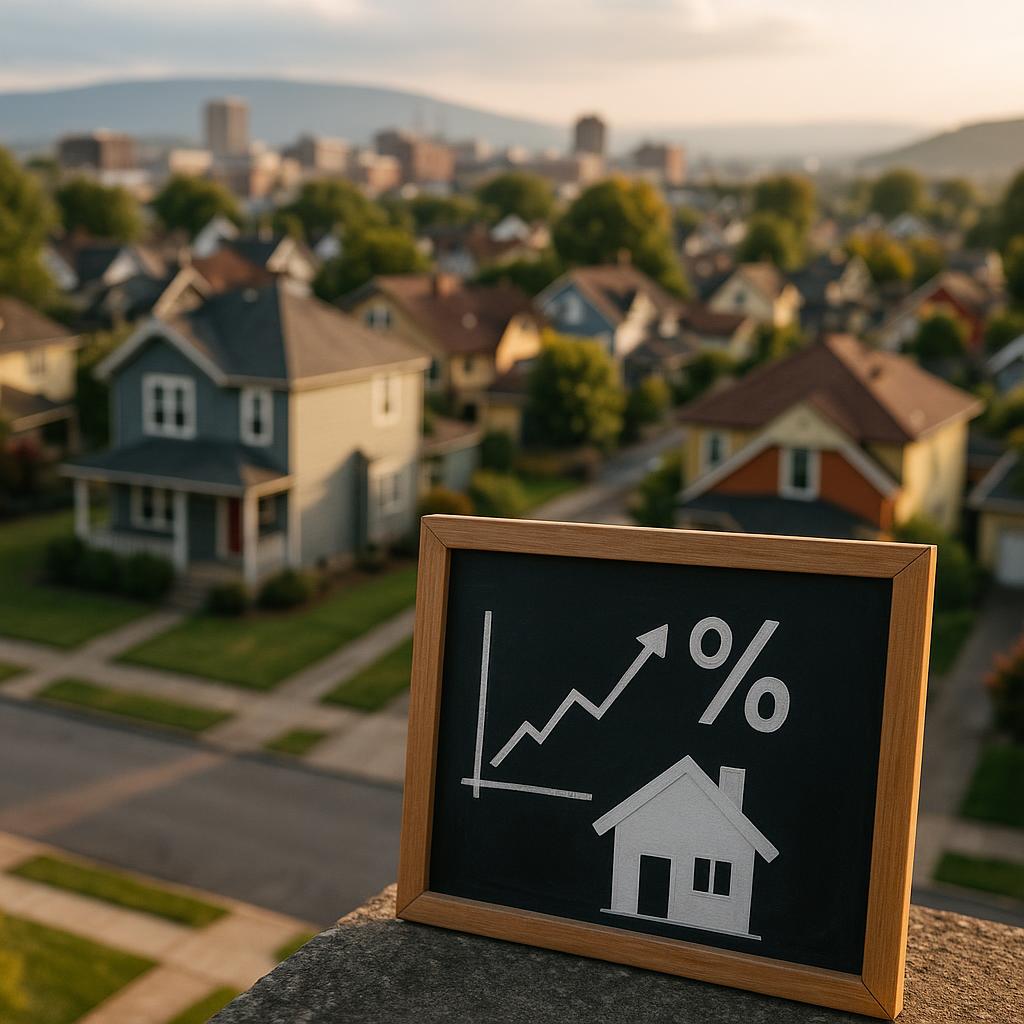
Mortgage rates for 30-year home loans are moving closer to 7%, according to the latest Freddie Mac rate snapshot discussed in a September 17, 2026 report from Biztoc. Although the available report describes an expected increase rather than providing a final rate figure, higher borrowing costs are an important consideration for Chattanooga real estate investing.
For rental property owners and investors in Southeast Tennessee, the issue is not limited to whether a future purchase remains affordable. Financing costs can affect acquisition decisions, refinancing plans, cash flow, operating reserves, property values, and the timing of an investment strategy. The local rental market may continue to have demand, but a property that worked financially at a lower interest rate may require a different purchase price, larger down payment, or more conservative expectations as rates rise.
Overview of the News
Freddie Mac, a major source of weekly mortgage rate data, was expected to report that the average rate for a 30-year mortgage had increased again, bringing it closer to 7%. The report does not establish how long rates will remain near that level or what the next rate movement will be.
That uncertainty matters to real estate investors. Mortgage rates influence the cost of capital used to acquire or refinance property, but they do not independently determine whether a rental investment is sound. An owner still needs to evaluate purchase price, expected rent, vacancy, maintenance, taxes, insurance, utilities, management costs, and reserves.
Higher rates can also affect the broader housing market. Some buyers may delay purchasing a home, remain renters longer, or reduce the price range they can afford. Those responses could support rental demand in some areas, although the effect will vary by tenant profile, employment conditions, housing supply, and the specific submarket.
What This Means for Chattanooga Rental Property Owners
Existing owners with fixed-rate financing may not experience an immediate change in their monthly principal and interest payment. However, higher rates can still affect decisions about refinancing, selling, purchasing another investment property, or using equity for improvements. Owners with adjustable-rate debt, loans approaching maturity, or planned refinancing should review their potential payment changes rather than assuming prior financing terms will remain available.
For an owner considering a new rental purchase, the central question is whether the property produces acceptable cash flow after realistic expenses at current financing costs. A simple rent-minus-mortgage calculation is not enough. The analysis should include vacancy, turnover, leasing costs, property maintenance, capital repairs, insurance, property taxes, utilities paid by the owner, and professional rental property management if the owner does not handle operations personally.
Higher financing costs may also make an owner more dependent on strong rent positioning and consistent operations. That does not mean raising rent automatically is the right response. Rent must remain appropriate for the property condition, location, amenities, and competing inventory. In areas such as Downtown Chattanooga or Northshore, an owner may be evaluating a different tenant pool and expense profile than an owner of a property in East Brainerd or Hixson. Local market differences matter when estimating both income and turnover.
Owners should also be careful about treating rental property as passive income. When financing becomes more expensive, preventable operating problems can have a larger effect on the investment. Slow maintenance response, weak tenant communication, poor lease administration, or extended vacancy can undermine a property’s performance even when the broader rental market remains reasonably active.
Impact on the Chattanooga Rental Market
The available news report does not provide Chattanooga-specific information about rents, vacancy, or rental demand. As a result, the local outcome cannot be determined from the mortgage rate news alone. Still, several potential effects are worth monitoring.
First, some households who might otherwise purchase a home may continue renting if monthly ownership costs rise. That could support demand for well-maintained long-term rentals. The effect may be more noticeable for homes that offer a practical alternative to ownership, including properties with suitable locations, predictable lease terms, and manageable monthly costs.
Second, higher rates may reduce the number of buyers competing for investment properties. Some investors may postpone acquisitions, while others may seek lower purchase prices, smaller properties, or locations with more favorable expense structures. Reduced investor activity does not automatically create better opportunities. A lower purchase price may reflect property condition, neighborhood-specific demand, deferred maintenance, or other risks that need to be examined.
Third, homeowners who remain in place because they do not want to replace an existing mortgage may limit the number of homes entering the sales market. That could affect the supply of properties available to investors, although the direction and size of any local effect are uncertain.
In Southeast Tennessee, investors may compare established Chattanooga neighborhoods with communities outside the urban core, such as Red Bank, East Ridge, or Ooltewah. Those comparisons should go beyond asking which area has the highest advertised rent. The analysis should consider tenant demand, commute patterns, property taxes, insurance, maintenance logistics, age and condition of housing stock, and the time required to manage the property.
Mid-term rental owners should also avoid assuming that a furnished or flexible-term strategy will automatically offset higher debt costs. That model can involve additional furnishing, utilities, cleaning, turnover, marketing, and compliance considerations. The right strategy depends on documented demand and carefully estimated operating expenses.
What Real Estate Investors Should Watch
Investors evaluating Chattanooga real estate investing should watch financing terms and property-level performance together. A favorable interest rate cannot rescue an overpriced property with weak demand, and a higher rate does not automatically make every property a poor investment. The decision depends on the complete financial model and the investor’s time horizon.
- Debt service and reserves: Model the anticipated loan payment at the actual rate and terms available, then determine whether adequate reserves remain for vacancy, repairs, turnover, and unexpected costs.
- Rent support: Review comparable rental properties and current competition before relying on a projected rent. Advertised pricing is not proof that a unit will lease at that amount.
- Vacancy and turnover: Estimate realistic downtime between tenants and the cost of preparing the property for a new lease. A higher monthly rent may not improve results if it creates longer vacancy.
- Refinancing risk: Owners with loans that may reset or mature should understand possible future payments and begin planning before a refinancing deadline.
- Property condition: Inspect major systems and identify deferred maintenance. Financing pressure can make a large repair or capital project more difficult to absorb.
Investors should also compare a property’s projected performance with alternative uses of capital. A purchase may still fit a long-term strategy, but the decision should be based on the investor’s goals, risk tolerance, available liquidity, and ability to manage the asset through different market conditions.
Practical Next Steps for Property Owners
Start by reviewing each property’s current income and expenses rather than relying on general market commentary. Compare scheduled rent with collected rent, identify recurring maintenance costs, and examine the amount of time and money spent on turnover. If the property is underperforming, determine whether the cause is pricing, condition, tenant selection, leasing process, maintenance, or a broader demand issue.
Owners considering a purchase should run several financing scenarios. Include the quoted interest rate, loan fees, down payment, estimated payment, reserves, and a reasonable range of vacancy and repair costs. If the numbers only work under ideal assumptions, the investment may need a lower acquisition price, different financing structure, or a revised strategy.
Owners with multiple properties may also benefit from reviewing their debt maturities and reserve levels as a portfolio. A property that performs adequately on its own can still create pressure if several loans, major repairs, or tenant turnovers occur at the same time.
Operational discipline remains important regardless of the rate environment. Consistent tenant communication, documented inspections, prompt maintenance coordination, accurate lease management, and appropriate rent positioning can help owners make decisions based on actual property performance. Professional management may also be worth evaluating for out-of-area investors or owners who do not have the time to oversee daily operations in Chattanooga and surrounding communities.
If you own rental property in the Chattanooga area and are evaluating whether professional management makes sense for your investment, Capstar Property Management can help you review your current management needs and property goals. No management approach can eliminate market or financing risk, but a clear operating process can help owners monitor expenses, tenant relationships, maintenance, and long-term performance.
Mortgage rates nearing 7% create a reason for Chattanooga rental property owners and investors to reassess assumptions, not to make automatic decisions. For Chattanooga real estate investing, the most useful response is a property-by-property review of financing, rental demand, vacancy, expenses, condition, and management capacity. That analysis can help owners decide whether to acquire, refinance, hold, improve, or wait.
Created by Capstar Property Management AI Assistant.